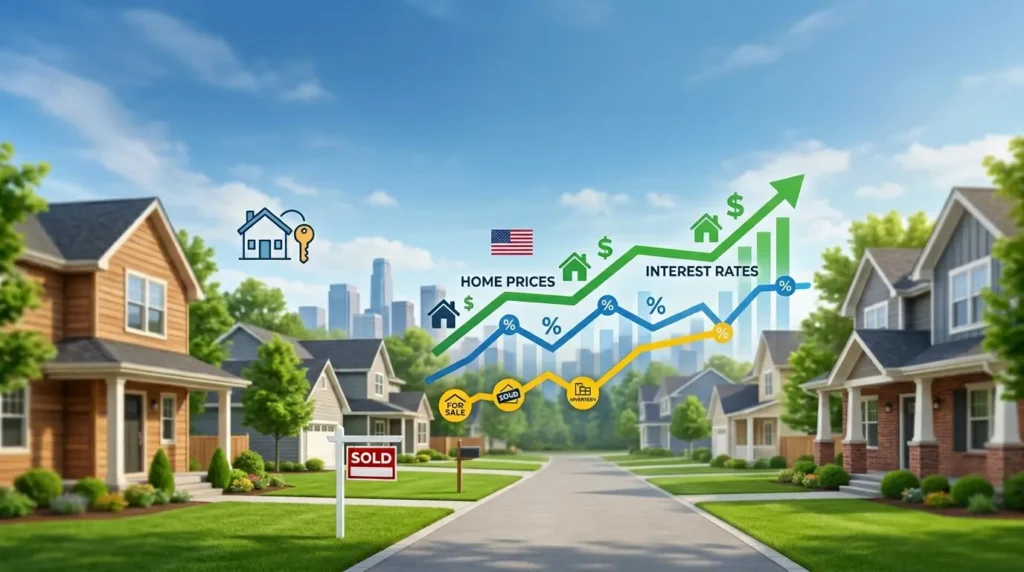
The American real estate market has been on a historic, unprecedented rollercoaster ride over the last five years. From the pandemic-fueled buying frenzy and record-low 2% mortgage rates to the sudden spike to 8% rates that paralyzed the market in 2023, buyers, sellers, and investors are understandably suffering from economic whiplash.
As we look toward the future, the burning question on everyone’s mind is: What happens next? Will mortgage rates drop? Will home prices finally crash, or are we entering a new era of permanent unaffordability?
Navigating the largest financial transaction of your life requires data, not guesswork. This comprehensive 2,000-word guide provides the most accurate US housing market forecast available, breaking down macroeconomic trends, Federal Reserve policy, and demographic shifts. Whether you are a first-time buyer wondering if you should wait, a homeowner considering selling, or an investor looking for the next opportunity, this is your ultimate resource for housing market predictions 2026.
The 2026 US Housing Market Forecast: Home Price Trends
The most common question in real estate is whether home prices will crash. The short answer, according to the vast majority of economists, is no. The US housing market forecast for 2026 points toward price stabilization and modest appreciation, not a collapse.
Why Home Prices Won’t Crash
To understand home price trends, we must look at the foundational rule of economics: supply and demand.
- The Supply Constraint: Following the 2008 housing crash, homebuilders went bankrupt and stopped building for a decade. Today, the U.S. is facing a massive deficit of roughly 5.5 million housing units.
- The Lock-In Effect: Over 80% of current homeowners have mortgage rates below 5%. Because selling means giving up that low rate to take on a 6.5% or 7% mortgage, homeowners are refusing to sell. This artificially suppresses the supply of existing homes.
Because supply is historically low and demand remains steady, a massive price drop is highly unlikely. According to data from the National Association of Realtors (NAR), we expect to see home prices appreciate by 1% to 3% annually through 2026.
The Affordability Crisis
While prices won’t crash, they also won’t drop enough to solve the affordability crisis. With median home prices hovering near all-time highs and mortgage rates stubbornly elevated, the average American family is spending a larger percentage of their income on housing than ever before. This is forcing many would-be buyers to rent, which in turn drives up rental prices. If you are struggling with this math, read our guide on renting vs buying a home to see which option makes more financial sense in your state.
Mortgage Interest Rate Forecast: Will Rates Drop?
Mortgage rates are the single biggest variable dictating the health of the real estate market. The mortgage interest rate forecast for 2026 suggests a slow, gradual decline rather than a sudden drop.
The Federal Reserve’s Role
The Federal Reserve does not directly set 30-year mortgage rates, but their policies heavily influence them. Mortgage rates are tied to the 10-year Treasury yield and the price of Mortgage-Backed Securities (MBS). When the Fed raises the federal funds rate to combat inflation, mortgage rates rise.
As inflation slowly cools back toward the Fed’s 2% target, they have begun cutting rates. The US housing market forecast predicts that this measured cutting pace will slowly pull 30-year fixed mortgage rates down into the 5.5% to 6.0% range by the end of 2026.
The Danger of Waiting for 3% Rates
Many buyers are sitting on the sidelines, refusing to buy until rates return to 3%. This is a dangerous financial strategy. The economic conditions that created 3% rates (a global pandemic and a frozen economy) are gone. The historical average for a 30-year mortgage since 1971 is roughly 7.75%. Therefore, a rate in the high 5% range is historically very favorable.
If you wait for rates to hit rock bottom, millions of other buyers will be waiting too. When rates drop, those sidelined buyers will flood the market simultaneously, reigniting bidding wars and driving home prices up. You might get a 5% interest rate, but you will likely pay $50,000 more for the house. It is often better to “date the rate, marry the house” and refinance later. For a deeper dive, read our 2026 mortgage rate predictions.
The Housing Inventory Shortage Problem
You cannot discuss the US housing market forecast without addressing the severe housing inventory shortage. This shortage is the bedrock that protects the market from crashing.
Existing Inventory vs. New Construction
The “lock-in effect” has choked the market of existing inventory. However, this is creating a massive boom for homebuilders. Because buyers cannot find existing homes, they are turning to new construction.
Homebuilders are currently offering massive incentives to move this inventory, including paying for permanent mortgage rate buydowns. A builder might offer to buy your rate down from 6.5% to 4.99% for the first three years just to get you into the house. If you are house hunting, new construction communities are currently some of the best deals on the market.
The Demographic Tsunami
The demand for housing is being fueled by demographics. The largest generation in U.S. history—Millennials—are in their prime homebuying years (ages 28 to 43). They are aging into homeownership, getting married, and having children. This massive wave of demographic demand is colliding with a historic lack of supply. Even if the economy enters a mild recession, the underlying demographic demand will prevent home prices from collapsing. You can track these demographic shifts directly via the U.S. Census Bureau.
Are We in a Real Estate Bubble in 2026?
The fear of another 2008-style crash is omnipresent. However, a thorough real estate market analysis proves that we are not in a real estate bubble today.
2008 vs. 2026: The Critical Differences
The 2008 crash was caused by bad loans. Lenders were giving zero-down, stated-income, adjustable-rate mortgages to unqualified buyers. When the rates adjusted, people defaulted, and the market flooded with foreclosures.
Today’s market is completely different:
- Ironclad Lending Standards: Today’s buyers are highly qualified. Lenders require full income documentation, strict debt-to-income ratios, and pristine credit scores. The Federal Reserve Board’s Senior Loan Officer Opinion Survey (SLOOS) confirms that mortgage credit has actually tightened, meaning defaults are incredibly low.
- Massive Equity: American homeowners hold record amounts of equity in their homes. People are not leveraged to the hilt like they were in 2006.
- Fixed Rates: Over 90% of outstanding mortgages have fixed rates below 6%. Even if the economy sours, these homeowners have locked-in, affordable payments and will not be forced to sell.
Without a wave of forced foreclosures, a housing market crash is mathematically impossible.
Regional Real Estate Market Analysis: Sun Belt vs. Rust Belt
Real estate is hyper-local. While the national US housing market forecast calls for stabilization, regional markets will behave drastically differently.
The Sun Belt: Normalizing After a Boom
Markets in Florida, Texas, Arizona, and Tennessee saw explosive growth during the pandemic as remote workers fled high-tax states. However, this hyper-growth has stalled. In cities like Austin and Phoenix, home prices are actually slightly dipping as affordability stretched too far and insurance costs skyrocketed.
However, this is not a crash; it is a normalization. These markets still benefit from strong job creation and in-migration. We expect the Sun Belt to see flat to modest price growth in 2026.
The Midwest and Rust Belt: The Cash Flow Havens
For real estate investors, the Midwest remains the crown jewel. Cities like Cleveland, Indianapolis, and Birmingham offer price-to-rent ratios that generate incredible monthly cash flow. Because these markets did not experience the massive pandemic run-ups in price, they are insulated from severe corrections. If you are an investor looking for yield, these are the best places to buy investment property.
The Coasts: Stagnation
High-cost coastal markets like San Francisco, Seattle, and New York are suffering. High interest rates combined with multi-million dollar price tags make monthly payments impossible for most buyers. These markets will likely see stagnant prices or minor depreciation until interest rates drop significantly.
How the NAR Settlement Shifts the US Housing Market Forecast
A major new variable in the US housing market forecast is the 2024 National Association of Realtors (NAR) settlement. This settlement fundamentally changed how buyer agent commissions are handled, and it will have a ripple effect on the market through 2026.
Increased Transparency and Negotiation
Because buyer agent commissions are no longer automatically advertised on the MLS, buyers must negotiate this fee directly with their agent and sign a buyer agency agreement before touring homes.
This added transparency means buyers are more cost-conscious. In competitive markets, sellers may need to offer to pay the buyer’s agent commission (as a concession) to attract offers. This effectively increases the seller’s closing costs. To understand how these costs impact your bottom line, review our seller closing costs explained guide.
The Rise of Discount Brokers
As buyers and sellers realize that commissions are fully negotiable, there will be a massive shift toward hybrid and discount real estate models. Platforms like Countrywide Collective, which offers full-service listings at a transparent 2.5% rate, will dominate the market as sellers refuse to pay the traditional 3%. For a full breakdown of how the rules changed, read our guide on real estate agent commission laws after the NAR settlement.
5 Strategies for Navigating the 2026 Housing Market
Based on the US housing market forecast, here are five actionable strategies for buyers, sellers, and investors:
1. Stop Trying to Time the Market
Trying to catch the absolute bottom of interest rates or the absolute bottom of home prices is a fool’s errand. If you find a home you love, can afford the monthly payment, and plan to live there for 5+ years, buy it. You can always refinance the rate later; you can never go back in time and buy the house at today’s price. Read our guide on whether you should wait for a housing market crash to understand the risks of waiting.
2. Leverage Seller Concessions and Rate Buydowns
If you are buying, ask the seller for a 2-1 rate buydown. Instead of lowering the home’s sale price, the seller pays a fee to temporarily lower your interest rate for the first two years. This gives you immediate cash flow relief and time to refinance when rates drop.
3. Explore Alternative Financing
Conventional 30-year fixed mortgages are not your only option. Look into FHA loans, VA loans, or USDA loans if you qualify. If you are buying in a suburban or rural area, a USDA loan offers zero down payment and below-market rates. Learn more in our USDA loan requirements guide.
4. House Hacking to Combat High Rates
If high interest rates make your monthly payment unaffordable, buy a duplex or a property with an Accessory Dwelling Unit (ADU). Live in one unit and rent out the other. The rental income will offset your mortgage, making the math work even in a high-rate environment. Explore this strategy in our ADU laws and costs guide.
5. For Sellers: Price Realistically and Prep the Home
The days of putting a sign in the yard and getting 10 offers over asking in 48 hours are gone. Sellers must price their homes according to current comparable sales, not 2022 peaks. Furthermore, because buyers are stretched thin, your home must be in pristine condition to command top dollar. Consider getting a pre-listing home inspection contingency to identify and fix issues before a buyer uses them to negotiate the price down.
The Long-Term Outlook: Beyond 2026
Looking past 2026, the long-term US housing market forecast remains overwhelmingly bullish. The structural housing deficit will take a decade to build out. Furthermore, as inflation stabilizes and mortgage rates settle into the 5% range, the “lock-in effect” will break. Millions of homeowners will finally list their properties, creating a healthy, normalized flow of inventory.
This increase in supply will prevent runaway price appreciation, but the massive demographic demand from Millennials and Gen Z will keep prices steadily climbing by 3% to 4% annually. Real estate will remain the premier vehicle for building generational wealth in the United States.
Frequently Asked Questions (FAQs)
What is the US housing market forecast for the next 5 years?
The US housing market forecast for the next five years predicts a return to normalcy. Experts expect home prices to appreciate at a steady, moderate rate of 2% to 4% annually. Mortgage interest rates are expected to stabilize in the high 5% to low 6% range. The severe housing inventory shortage will persist, preventing any market crash. You can review detailed long-term projections from the Joint Center for Housing Studies of Harvard University.
Will home prices drop in 2026?
No, the vast majority of economic forecasts do not anticipate a drop in home prices in 2026. While prices may stagnate or dip slightly in overheated coastal markets, the national median home price is expected to remain stable or see modest appreciation. This is due to the severe lack of housing supply and strong demographic demand from Millennials entering their prime homebuying years.
Are we currently in a real estate bubble?
No, we are not in a real estate bubble. A bubble is characterized by speculative buying fueled by loose credit and risky loans. Today’s market is supported by strict lending standards, massive homeowner equity, and fixed-rate mortgages. The current high prices are a result of a genuine supply-and-demand imbalance, not speculative frenzy. Data from the Mortgage Bankers Association (MBA) confirms that default rates are at historic lows.
When will mortgage rates go down?
Mortgage rates are expected to slowly decrease throughout 2025 and 2026 as the Federal Reserve continues to lower the federal funds rate in response to cooling inflation. However, rates will not return to the historic 3% lows seen during the pandemic. Buyers should expect rates to settle in the 5.5% to 6.0% range. You can track official rate trends via Freddie Mac’s Primary Mortgage Market Survey.
Should I buy a house now or wait for a market crash?
Waiting for a housing market crash is generally a poor financial strategy. Because a crash is unlikely due to the housing shortage, waiting means continuing to pay rent (which is subject to annual increases) and missing out on equity build-up and tax deductions. It is usually better to buy a home now, secure the asset, and refinance the mortgage later if rates drop. The Consumer Financial Protection Bureau (CFPB) provides excellent resources on the benefits of buying versus waiting.
Conclusion: A Market Returning to Normalcy
The housing market of 2021 was an anomaly fueled by a global emergency. The US housing market forecast for 2026 represents a return to historical normalcy. Interest rates in the 5% to 6% range are healthy; they reward savers and prevent speculative bubbles. Home prices will grow at a sustainable pace, and buyers will regain negotiating power.
Do not let fear of a theoretical crash keep you on the sidelines. Whether you are buying your first home or selling an investment property, success lies in understanding the data and working with professionals who know how to navigate shifting tides.
At Countrywide Collective, our vertically integrated platform is built for clarity, speed, and clean execution. We provide transparent pricing, off-market deal flow, and expert guidance to help you win in any market cycle.
Ready to make your next real estate move? Contact Countrywide Collective today to get a free property valuation and expert advice tailored to your specific goals.