Life is unpredictable. Whether you are facing a sudden job relocation, inheriting a distressed property, going through a divorce, or teetering on the edge of foreclosure, sometimes you need to liquidate your real estate assets immediately. The traditional real estate market is not built for speed. Listing your home on the MLS, staging it for showings, waiting for a buyer to secure financing, and navigating a 45-day escrow period can take months.
When time is of the essence, waiting is not an option. This is where the sell house fast for cash strategy becomes a financial lifesaver. By bypassing the traditional retail market and working directly with cash buyers, you can close in a matter of days, not months.
However, the cash buyer market is vast and varied. From local “We Buy Houses” investors to algorithmic iBuyers and hybrid real estate platforms, the options can be overwhelming. This comprehensive guide will break down the five best cash offer options, explain the pros and cons of selling a house as-is, and teach you how to spot predatory buyers. If you want to know how to sell house without realtor fees and close quickly, this is the ultimate resource for you.
What Does It Mean to Sell House Fast for Cash?
To understand the sell house fast for cash process, you must first understand how a traditional real estate transaction works. In a standard sale, a buyer makes an offer, goes to a bank to apply for a mortgage, and the lender orders an appraisal. The bank then underwrites the loan, a process that takes 30 to 45 days. During this time, the buyer’s financing can fall through if they lose their job, their credit drops, or the home appraises for less than the purchase price.
When you sell to a cash buyer, there is no bank involved. The buyer uses their own liquid funds (or a private line of credit) to purchase the property outright. Because there is no lender, there is:
- No appraisal contingency.
- No loan approval contingency.
- No 30-day waiting period.
A true cash buyer can often close in 7 to 14 days, providing the seller with immediate liquidity and absolute certainty of closing.
The Ultimate Guide: How to Sell House Fast for Cash in 2025
Not all cash buyers are created equal. Some offer convenience but charge steep fees; others offer rock-bottom prices but take the property entirely as-is. Here are the five primary avenues to sell house fast for cash in the United States.
Option 1: Local “We Buy Houses” Investors
You have likely seen their bandit signs on telephone poles or received their yellow letters in the mail. Local real estate investors, often operating under the banner of we buy houses for cash, are individuals or small LLCs looking to acquire distressed properties at a discount.
- The Model: These investors use the BRRRR method (Buy, Rehab, Rent, Refinance, Repeat) or fix-and-flip strategies. They need to buy your house at a discount—usually 70% of the After Repair Value (ARV) minus repair costs—to make their own profit.
- The Pros: They buy houses in any condition. If your home has fire damage, foundation issues, or severe hoarding situations, these investors will take it off your hands without asking you to make a single repair.
- The Cons: You will not get top dollar. These buyers are taking on significant risk, so they expect a discount. Expect offers between 50% and 70% of the home’s market value.
Option 2: iBuyers (Opendoor, Offerpad, Sundae)
iBuyers are large, tech-driven companies (like Offerpad or Opendoor) that use automated valuation models (AVMs) to make instant cash offers on residential properties.
- The Model: You enter your address on their website, and within 24 hours, they generate a real estate cash offer based on algorithmic data. If you accept, they inspect the home and deduct the cost of necessary repairs from the offer.
- The Pros: Speed, convenience, and digital transparency. iBuyers are ideal for homes in good condition located in major suburban metros. They allow you to pick your closing date.
- The Cons: iBuyers charge “convenience fees” (often 5% to 7% of the sale price) on top of repair deductions. When you factor in the fees, you might net less money than if you had sold with a traditional agent. Furthermore, iBuyers have paused operations in many volatile markets.
Option 3: Hybrid Real Estate Platforms (e.g., Countrywide Collective)
If you want the speed of a cash sale but don’t want to sacrifice 30% of your equity to an investor, a vertically integrated platform like Countrywide Collective is the ideal solution.
- The Model: We are a disciplined operator platform that acquires, develops, and disposes of real estate. We give sellers priority access to our off-market deal flow. We can present you with a fair, no-obligation cash offer, or we can list your property on the MLS at a transparent 2.5% commission to maximize your net proceeds.
- The Pros: You get the best of both worlds. We give you the option to sell quickly to our acquisitions engine, or we can market the property traditionally. We are built for speed, clarity, and clean execution from contract to close.
- The Cons: We may not be able to purchase severely distressed, uninhabitable properties at a deep discount like a local flipper would.
Option 4: Cash Offer Programs by Brokerages
In recent years, major real estate brokerages have launched their own cash offer programs to compete with iBuyers. Programs like KellerOffers or RealSure allow you to get a cash offer from your agent’s corporate backing.
- The Model: The brokerage buys your house for cash, makes light repairs, and relists it on the open market.
- The Pros: You get the certainty of a cash sale and the backing of a large, reputable corporation.
- The Cons: These programs are highly selective. If your home needs major structural work, they will pass. They also charge fees similar to iBuyers.
Option 5: Direct to a Local Landlord
If your property is already tenant-occupied and cash-flowing, you can bypass traditional buyers and sell directly to a local landlord looking to expand their portfolio.
- The Model: Landlords value cash flow over pristine cosmetic condition. If your property has a paying tenant and functional mechanicals, a landlord will buy it as-is.
- The Pros: You can sell the house with the tenant in place, avoiding the hassle of coordinating showings with a renter.
- The Cons: Finding these buyers requires networking at local Real Estate Investor Association (REIA) meetings or marketing directly to absentee owners.
The Mathematics of Selling a House As-Is
The primary reason sellers choose to sell house fast for cash is to avoid the time and expense of prepping a home for the retail market. But you must understand the math behind selling a house as-is.
When you sell a home on the open market, you are selling to an owner-occupant. Owner-occupants use conventional loans (FHA, VA, Conventional). These lenders require the home to meet strict livability standards. If the roof is leaking, the paint is peeling, or the handrails are missing, the lender will not approve the loan. Therefore, a retail seller must spend $15,000 to $30,000 upfront on repairs just to get the house to qualify for financing.
When you sell to a cash buyer, you transfer the burden of repairs to the buyer. The buyer will deduct the estimated repair costs from their offer, but you save the upfront out-of-pocket expense and the months of contractor delays.
Furthermore, traditional sales come with hefty closing costs. You will pay 5% to 6% in real estate commissions, plus 2% to 3% in seller concessions, transfer taxes, and escrow fees. To understand the full breakdown, review our seller closing costs explained guide.
When comparing a cash offer to a retail offer, you must calculate your net proceeds, not just the top-line price. A $300,000 retail offer might net you $260,000 after commissions, repairs, and concessions. A $275,000 cash offer with zero fees and zero repairs might actually put more money in your pocket.
When You Should Sell House Fast for Cash
Selling for cash is not for everyone. If you have a pristine home in a hot market and plenty of time, listing on the MLS will almost always yield the highest gross price. However, selling for cash is the absolute best strategy in the following scenarios:
1. Facing Foreclosure or Default
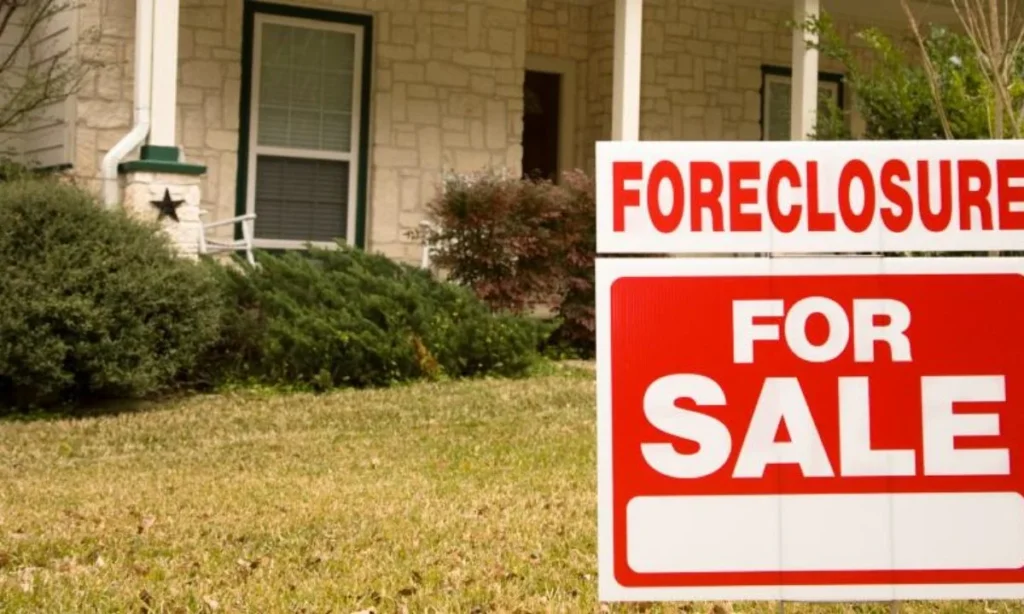
If you are behind on your mortgage payments and the bank has filed a Notice of Default, the clock is ticking. A traditional sale takes 45 to 60 days, and if the buyer’s financing falls through, you could lose the house to the auction block. A cash buyer can close in 7 days, paying off the bank and saving your credit from a devastating foreclosure mark. (If you are in this situation, you may also want to understand how to buy a foreclosed home for your next move).
2. Inherited Properties in Distress
Inheriting a house from an elderly relative often means inheriting 40 years of deferred maintenance, outdated wiring, and severe clutter. Estate executors do not have the time or capital to clean out the house, replace the roof, and update the 1970s kitchen. Fast cash home buyers will purchase the estate exactly as it sits, often dealing with the junk-out process themselves.
3. Relocation for a Job
If you get a dream job offer in another state and need to move in two weeks, you cannot wait for a retail buyer. A cash sale provides immediate liquidity, allowing you to purchase your new home in your new city without carrying two mortgages.
4. Divorce or Financial Distress
During a divorce, liquidating shared assets quickly and cleanly is often paramount to both parties. Cash sales eliminate the prolonged stress of showings, negotiations, and escrow battles.
How to Sell House Without Realtor Fees
One of the most appealing aspects of a cash sale is the ability to sell house without realtor commissions. In a traditional sale, the seller pays the listing agent (usually 2.5% to 3%) and the buyer’s agent (another 2.5% to 3%). On a $400,000 home, that is $20,000 in commissions.
However, the 2024 NAR settlement changed the landscape. Commissions are no longer automatically advertised on the MLS, and sellers have more power to negotiate these fees. If you are selling to a cash investor, there is usually no buyer’s agent involved, eliminating half the commission equation immediately.
If you choose to list with a hybrid platform like Countrywide Collective, you benefit from our transparent 2.5% listing model, which saves you thousands compared to traditional 3% brokerages, even if you decide to go the retail route. To understand the new rules, read our detailed breakdown of the real estate agent commission laws after the NAR settlement.
Red Flags: How to Avoid Predatory Cash Buyers
While the majority of cash buyers are legitimate investors, the industry has its share of bad actors. If you are trying to sell house fast for cash, watch out for these red flags:
1. Proof of Funds
Never accept a cash offer without seeing the buyer’s Proof of Funds (POF). A legitimate cash buyer will have a bank statement or a letter from a private lender proving they have the liquid capital to close. If the buyer refuses to provide a POF, they are likely a wholesaler who does not actually have the money to buy your house and is just trying to assign your contract to a third party.
2. Pressure Tactics and Earnest Money
Predatory buyers will pressure you to sign a contract immediately without giving you time to review it. Furthermore, they will often refuse to put down a substantial earnest money deposit. A reputable cash buyer should be willing to put at least 1% to 2% of the purchase price in escrow as earnest money to show their commitment to the deal.
3. The Bait-and-Switch
Some buyers will make a high offer over the phone to get you under contract. Then, during the inspection period, they will drastically reduce their offer, claiming they found “hidden damage.” This is known as a bait-and-switch. Protect yourself by working with a transparent, vertically integrated platform like Countrywide Collective, where the offer you agree to is the offer you close at. You can verify a buyer’s legitimacy by checking their standing with the Better Business Bureau (BBB).
The Step-by-Step Cash Sale Process
If you are ready to execute a sell house fast for cash strategy, here is exactly what the process looks like:
Step 1: Request an Offer
Submit your property address and basic details to a cash buyer or platform. You do not need to clean the house or take professional photos.
Step 2: Receive and Evaluate the Offer
Within 24 to 48 hours, you will receive a written, no-obligation cash offer. Evaluate the net proceeds. Compare the offer to your mortgage payoff amount to ensure you have enough equity to close.
Step 3: Sign the Contract
If you accept the offer, you sign a simple purchase agreement. At this point, the buyer will deposit their earnest money into a neutral escrow account.
Step 4: Title Search
A title company will conduct a search to ensure there are no hidden liens, judgments, or unpaid taxes attached to the property. If the title is clear, the closing is scheduled.
Step 5: Closing and Funding
You will sign the final deed transfer documents at the title company (or via a mobile notary). Because there is no lender involved, the funds are wired to your account almost immediately. The entire process, from offer to funding, can be completed in as little as 7 to 14 days.
Frequently Asked Questions (FAQs)
Are cash offers for houses legit?
Yes, the majority of cash offers are legitimate. Cash buyers are typically real estate investors, iBuyers, or local landlords who have the liquid capital to purchase a property without securing a bank loan. However, sellers must protect themselves by requesting a “Proof of Funds” (POF) document from the buyer before signing a contract. You can learn more about real estate regulations and consumer protection via the Consumer Financial Protection Bureau (CFPB).
How fast can I sell my house for cash?
A true cash sale can close in as little as 7 to 14 days. The timeline is largely dictated by the title company’s ability to clear the title of any liens or judgments. If the title is clean and the buyer has the funds ready, closing can happen almost immediately after the inspection period ends.
Do cash buyers pay closing costs?
Typically, cash buyers cover their own closing costs, and sellers in a cash deal pay significantly fewer fees than in a traditional retail sale. Sellers will still be responsible for paying off their existing mortgage, any outstanding property taxes, and a portion of the title insurance. However, they avoid paying real estate commissions and lender-mandated repair costs.
Will I get less money selling for cash?
You will likely receive a lower gross purchase price from a cash buyer compared to a retail buyer on the open market. Cash buyers need a discount to account for the risk and the cost of repairs. However, when you factor in the savings from real estate commissions (5-6%), repair costs (2-5%), and holding costs (mortgage, taxes, insurance during the 60-day retail sale process), the net proceeds from a cash sale are often closer to a retail sale than most sellers realize.
Can I sell my house for cash if it needs major repairs?
Yes, absolutely. This is the primary advantage of the sell house fast for cash strategy. Cash buyers purchase properties “as-is.” Whether the home has a failing foundation, a collapsed roof, or extensive water damage, a cash buyer will take the property in its exact condition and handle the repairs themselves after the closing.
Conclusion: Speed, Certainty, and Peace of Mind
Choosing to sell house fast for cash is a strategic decision prioritized for speed, certainty, and convenience over maximizing gross profit. It eliminates the anxiety of buyer financing fall-throughs, the burden of upfront repair costs, and the endless showings associated with the retail market.
Whether you are facing foreclosure, managing a distressed inheritance, or simply need to relocate immediately, a cash sale provides a clean break. However, it is vital to partner with a buyer who offers transparent pricing and fair terms.
At Countrywide Collective, we provide a vertically integrated real estate platform built for clarity and clean execution. We give you the option to take a fair cash offer or list your property with our transparent 2.5% model.
Ready to get a no-obligation cash offer today? Contact Countrywide Collective to explore your options and take the first step toward a fast, secure real estate transaction.