The housing market in 2025 is defined by low inventory and high demand. For homeowners looking to generate passive income, house a multigenerational family, or simply maximize their property’s footprint, the Accessory Dwelling Unit (ADU) has emerged as the ultimate real estate hack.
Often referred to as granny flats, backyard cottages, or in-law suites, ADUs are secondary housing units located on the same lot as a primary residence. Over the past five years, state legislatures across the U.S. have recognized the potential of ADUs to solve housing crises, leading to a sweeping relaxation of zoning laws.
However, navigating the complex web of ADU laws and costs by state remains the biggest hurdle for homeowners. In this comprehensive 2,000-word guide, we will break down everything you need to know about accessory dwelling unit requirements, the true cost to build an ADU, financing options, and how to calculate your potential ADU ROI.
What is an Accessory Dwelling Unit (ADU)?
An ADU is a self-contained living space complete with its own kitchen, bathroom, and sleeping area. Unlike a guest room, an ADU functions as an independent dwelling. They typically come in three forms:
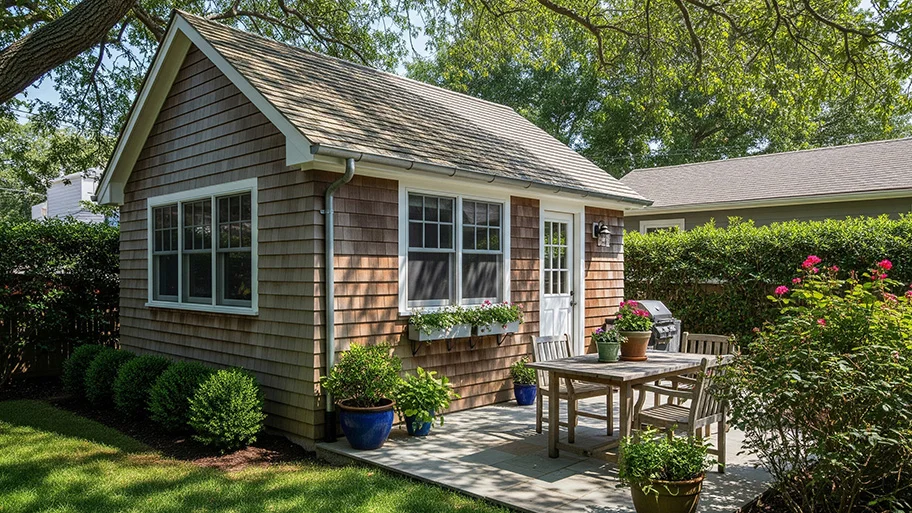
- Detached ADU: A standalone structure built in the backyard, separate from the main house. This is the most popular—and most expensive—option.
- Attached ADU: An addition to the primary home, sharing at least one wall.
- Garage Conversion ADU: Transforming an existing attached or detached garage into a living space. This is often the most cost-effective route.
- Junior ADU (JADU): A smaller unit (usually under 500 sq. ft.) created within the existing walls of the primary home, often with an efficiency kitchen.
The Ultimate 2025 Guide to ADU Laws and Costs by State
For decades, strict single-family zoning laws made building an ADU nearly impossible in many neighborhoods. Homeowners were met with insurmountable parking requirements, minimum lot sizes, and homeowner association (HOA) vetoes. Today, states are actively preempting local zoning to encourage ADU construction.
When analyzing ADU laws and costs by state, it is crucial to understand that while state laws provide the overarching framework, local city and county municipalities still handle permitting and specific design standards.
California: The Pioneer of ADU Laws
California leads the nation in ADU reform. The state has essentially eliminated single-family zoning barriers, making it illegal for cities to deny ADU permits based on parking requirements or HOA objections.
- Laws: Homeowners can build both an ADU and a Junior ADU on the same lot. Owner-occupancy requirements (requiring the owner to live on the property) were struck down in 2020.
- Costs: Due to high labor and material costs, the cost to build an ADU in California ranges from $150,000 for a garage conversion to $400,000+ for a custom detached unit. Despite the high costs, the rental yield often justifies the investment.
Texas: Navigating Local Zoning
Texas does not have sweeping statewide ADU mandates like California, meaning backyard cottage laws are dictated by individual municipalities.
- Laws: In Austin, for example, the city relaxed its regulations to allow up to three units on a single-family lot (a main house, an ADU, and a duplex). However, in Dallas or Houston, regulations can be significantly stricter, often requiring variances for setback or lot coverage.
- Costs: Building an ADU in Texas is more affordable, ranging from $80,000 to $200,000.
Florida: High Demand, Local Control
Florida’s warm climate makes it ideal for detached ADUs, particularly for aging relatives.
- Laws: Similar to Texas, Florida leaves zoning to the counties. Miami-Dade and Los Angeles have different rules, but generally, Florida is becoming more ADU-friendly to address its severe housing shortage.
- Costs: The cost to build in Florida ranges from $90,000 to $250,000, depending on hurricane-proofing requirements and impact fees.
Oregon and Washington: Leading the Pacific Northwest
Oregon passed a landmark law requiring cities with populatBreaking Down the Cost to Build an ADU
Understanding the true cost to build an ADU requires looking beyond the builder’s quote. “Soft” and “hard” costs can quickly inflate a budget if you aren’t prepared.
Hard Costs (Construction)
Hard costs represent the physical construction of the unit.
- Site Preparation: Grading, trenching for utilities, and demolishing existing structures (like an old shed or garage).
- Foundation: Slab foundations are cheapest; stem-wall or crawl space foundations cost more but may be required by local frost lines.
- Framing and Exterior: Lumber costs fluctuate, but framing is typically 15-20% of the total budget.
- Systems (MEP): Mechanical (HVAC), Electrical, and Plumbing. Running new sewer lines or upgrading an electrical panel to support the ADU can add $10,000 to $20,000 to your budget.
Soft Costs (Design and Permitting)
Soft costs are the non-construction expenses required to get the project permitted and designed.
Financing Costs: Loan origination fees and interest during construction.ions over 2,500 to allow ADUs in single-family zones. Washington state swiftly followed, passing legislation that severely limits local governments’ ability to restrict ADUs.
Architectural Plans: Custom plans cost $5,000 to $15,000.
Engineering: Structural, soils, and civil engineering reports can add another $2,000 to $5,000.
Permit Fees: City impact fees, school fees (in states like California), and plan check fees can range from $3,000 to $15,000 depending on the jurisdiction.
- Costs: In the Pacific Northwest, expect to pay between $100,000 and $250,000 for a standard detached ADU.
Prefab ADU Cost vs. Custom Stick-Built
One of the most significant decisions you will make is choosing between a prefabricated (modular) ADU and a traditional site-built (stick-built) ADU.
The Prefab Advantage
A prefab ADU is built in a climate-controlled factory, transported to your property, and assembled. The prefab ADU cost is often lower because factory construction reduces waste, labor costs, and weather delays.
- Cost: $80 to $150 per square foot (excluding delivery, foundation, and utility hookup).
- Timeline: Factory build takes 8-12 weeks. Site assembly takes 1-2 weeks.
- Pros: Fixed pricing, predictable timeline, eco-friendly construction.
- Cons: Limited customization; transporting the unit requires a wide access road and clear paths to the backyard.
The Custom Stick-Built Advantage
Custom ADUs are built entirely on your property from the ground up.
- Cost: $150 to $300+ per square foot.
- Timeline: 6 to 12 months.
- Pros: Complete design freedom; ideal for awkwardly shaped lots or matching the exact architecture of the primary home.
- Cons: Vulnerable to weather delays, labor shortages, and cost overruns.
Accessory Dwelling Unit Requirements: What You Need to Know
Before breaking ground, you must satisfy local accessory dwelling unit requirements. While state laws have relaxed, here are the standard requirements you will encounter:
- Setbacks: Most cities require a 4-foot to 5-foot setback from side and rear property lines. If your lot is unusually small, you may need a variance.
- Height Limits: Detached ADUs are usually capped at 16 feet for single-story structures. Some states allow 24 feet for two-story ADUs.
- Parking: Historically, cities required an extra parking spot for an ADU. Today, most states have abolished this requirement if the property is within a half-mile of public transit.
- Utility Connections: You must prove that the existing municipal water, sewer, and electrical systems can handle the additional load. If not, you will have to pay for upgrades.
- Owner Occupancy: While some states have banned owner-occupancy mandates, certain local jurisdictions still require the property owner to live in either the main house or the ADU.
ADU Financing Options: How to Pay for It
Unless you have $150,000 in cash sitting in the bank, you will need to explore ADU financing options. Traditional mortgages don’t cover ADU construction, but several financing avenues exist:
1. Home Equity Line of Credit (HELOC)
If you have significant equity in your primary home, a HELOC allows you to borrow against it. This is a revolving line of credit with variable interest rates. It is best for homeowners who want flexibility in drawing funds as construction phases progress.
2. Cash-Out Refinance
A cash-out refinance replaces your existing mortgage with a larger one, allowing you to take the difference in cash. This is an excellent option if current interest rates are lower than your existing mortgage rate, though rates in 2025 make this less appealing for those who locked in 3% rates during the pandemic.
3. Renovation Loans (FHA 203k or Fannie Mae HomeStyle)
These loans allow you to finance both the home purchase (or refinance) and the ADU construction into a single mortgage. They require the lender to work closely with your contractor to release funds as milestones are met.
4. State-Specific ADU Grants
States like California offer ADU grant programs that provide up to $40,000 in forgivable loans for pre-development costs (architectural designs, permits, soil testing). These are designed to lower the barrier to entry for middle and low-income homeowners.
To understand the broader implications of adding living space to your property, you can review our guide on homeowner tax deductions, as some ADU costs may be tax-deductible if structured correctly.
Calculating Your ADU ROI
Is an ADU a good investment? The answer lies in calculating your ADU ROI (Return on Investment). ROI is determined by comparing the total cost of the project against the added property value and the rental income generated.
Let’s look at a real-world example:
- Total Project Cost: $150,000 (Garage Conversion)
- Market Rent for ADU: $1,800/month
- Annual Rental Income: $21,600
Gross ROI: ($21,600 / $150,000) x 100 = 14.4%
This 14.4% gross ROI vastly outperforms traditional stock market dividends or savings accounts. Furthermore, building an ADU can increase your overall property value by 20% to 35%, as the property now functions as a duplex.
When you decide to sell, having a permitted, income-generating ADU makes your property highly attractive to real estate investors. If you are planning to sell a property with an ADU, it is crucial to understand how to price it correctly. You can use our seller closing costs calculator to estimate your net proceeds, or reach out to Countrywide Collective for a professional valuation.
Conclusion: Is an ADU Right for You?
Adding an Accessory Dwelling Unit to your property is one of the most effective ways to generate passive income, increase property value, and provide housing for family members. While the process requires navigating complex ADU laws and costs by state, the financial rewards are substantial.
By understanding accessory dwelling unit requirements, accurately estimating the cost to build, and choosing the right financing options, you can turn your backyard into a high-yielding real estate asset. As housing shortages persist across the country, ADUs will continue to be a cornerstone of smart, adaptive real estate investing.
Ready to maximize your property’s potential? Whether you want to build an ADU to increase your rental portfolio or sell a property with an existing ADU, Countrywide Collective is here to help. Contact our team today to get a free, no-obligation property valuation and learn how we can help you achieve your real estate goals.
Frequently Asked Questions (FAQs)
What exactly is an Accessory Dwelling Unit (ADU)?
An Accessory Dwelling Unit (ADU) is a secondary housing unit located on the same residential lot as a primary home. Also known as granny flats or backyard cottages, ADUs have their own kitchen, bathroom, and sleeping facilities, allowing them to function as independent living spaces. They can be detached, attached, or converted from existing spaces like garages.
How much does it cost to build an ADU in 2025?
The cost to build an ADU varies significantly based on location, size, and type. On average, a garage conversion ADU costs between $80,000 and $120,000. A custom detached stick-built ADU generally ranges from $150,000 to $400,000. Prefabricated ADUs offer a more budget-friendly alternative, often costing between $80,000 and $150,000 before site preparation. You can research regional construction costs via the U.S. Census Bureau’s construction spending data.
Can I use an ADU as a short-term rental (like Airbnb)?
This depends entirely on your local municipality. While some cities embrace short-term rentals in ADUs to boost tourism revenue, others (like Los Angeles) have strict regulations prohibiting short-term rentals in ADUs, requiring them to be rented for terms of 30 days or longer. You must check your local zoning code and HUD’s local rental assistance and housing guidelines to ensure compliance.
Do ADUs require separate utility meters?
In many states, accessory dwelling unit requirements mandate that new ADUs have separate utility meters for electricity, gas, and water. This allows the utility company to bill the ADU tenant directly. However, if your ADU is a junior ADU or an internal conversion, you can often legally keep it on the main house’s meter, simplifying the construction process.
How does an ADU affect my property taxes?
Building an ADU will increase your property taxes because it adds significant assessed value to your property. However, under laws like California’s Proposition 13, your property is only reassessed for the value of the new construction, not the entire property. It is highly recommended to consult a local tax professional or refer to the IRS tax guide on residential rental property to understand how you can depreciate the ADU to offset your tax burden.